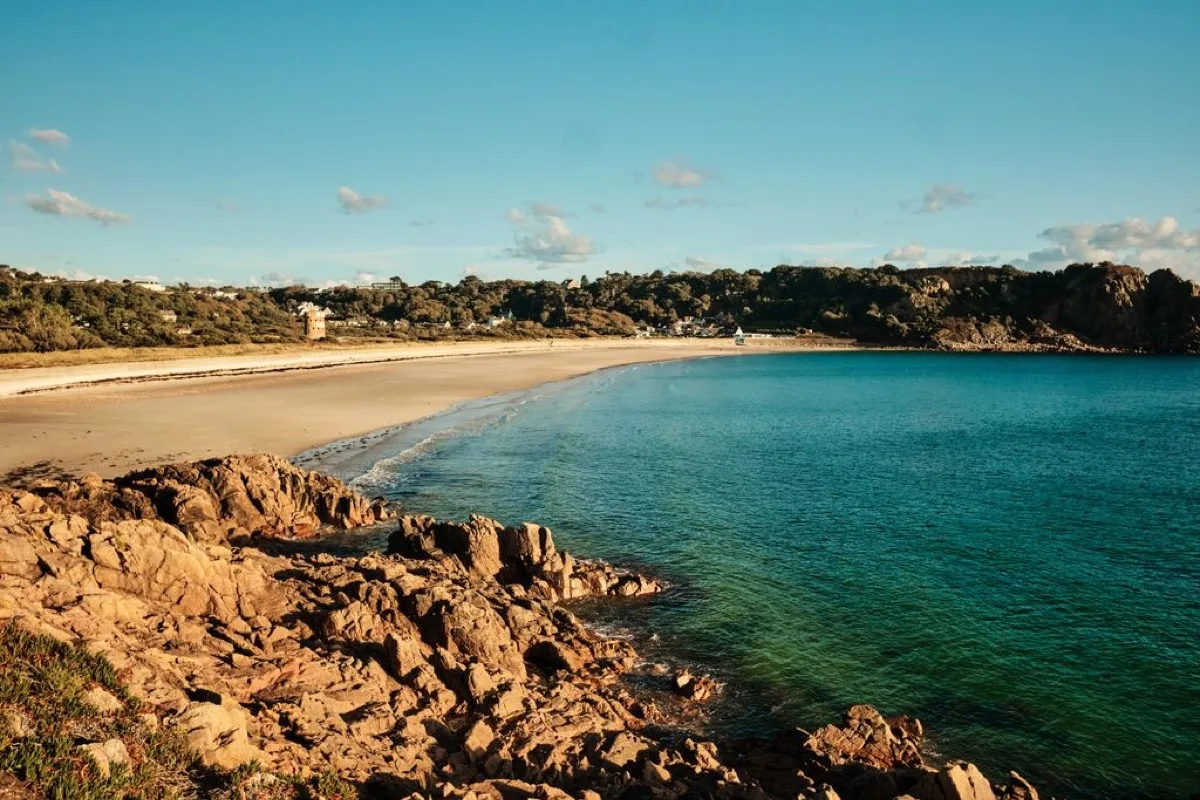
A sandy south-west bay adjoining St Brelade's at low water but quieter and less developed. The beach remains broad through much of the tide, with rocks and pools around the headlands and Ouaisné Common immediately behind it.
These predictions use St Helier, Jersey’s standard reference port. Local timing and conditions at Ouaisné Bay can vary slightly with weather and coastal geography. Times are shown in local Jersey time.
At lower water, Ouaisné joins directly to St Brelade's Bay. The route covers again on the rising tide, so do not wait until water is already crossing the rocks before returning.
Ouaisné lies immediately west of St Brelade's Bay, separated at higher water by a rocky headland. At lower tide the two beaches join into one continuous sweep of sand.
Despite that physical connection, Ouaisné has a different character: fewer commercial facilities, no promenade and a more natural backdrop formed by Ouaisné Common.
The beach faces south-west and is more exposed to wind and swell from that direction than the central part of St Brelade’s; Visit Jersey describes it as wilder than its neighbouring bay.
At low water, the beach widens and joins St Brelade's around the eastern headland. Rocks and pools are exposed at both ends, while the sea retreats across the sandy lower shore.
At mid tide, Ouaisné usually retains a substantial area of sand while offering a shorter walk to the water — generally the most versatile stage for swimming, paddling and sitting on the beach.
Near high water, the sea moves towards the sea wall, access points and upper sand, and the usable beach becomes narrower, particularly on larger tides. The tide also determines whether you can walk directly between Ouaisné and St Brelade's: once the water reaches the rocks, the beach-level route closes.
Ouaisné is used for swimming but is not lifeguarded. The central sandy shore generally provides the clearest entry; rocks become more significant near the headlands and may be submerged at higher water. The bay can appear protected, but it is more directly exposed to south-westerly weather than St Brelade's. People wanting supervised swimming should use St Brelade's during its lifeguard season rather than assuming the patrol covers both bays.
Swimmers should assess:
The sandy central shore is suitable for paddling in settled conditions. At lower water, shallow pools and channels may form around the rocks; at higher water, submerged stones and wave action may make the edges less comfortable. With no lifeguards and exposure that varies with the weather, the whole bay should not be treated as a protected paddling area.
The route around the eastern headland opens as the tide falls and covers again on the rising tide, so do not wait until water is already crossing the rocks before returning. People cut off from the beach-level route can use inland paths and roads, but that is not a reason to ignore the tide.
The rocky areas between Ouaisné and St Brelade's and around the western end reveal pools at lower water. Expect shallow pools, seaweed-covered ledges, small channels, crabs, anemones and small fish, and patches of coarse sand and stone. The key practical issue is the eastern headland, where incoming water can close the direct route between the two bays.
Ouaisné Common lies directly behind the beach and is a protected natural area. The Government of Jersey identifies it as an especially important site for reptiles, amphibians and invertebrates, including Jersey's largest breeding population of agile frogs. Remain on established paths, keep dogs under control, avoid entering ponds or sensitive vegetation, take litter away, and do not light fires or disposable barbecues outside designated arrangements.
Ouaisné can provide a sandy launch in suitable conditions. At low tide the carry to the water is longer; at higher water launching is shorter but there may be less room around the upper shore. Account for south-westerly wind, swell around the headlands, swimmers in the bay, submerged rocks, more exposed conditions beyond the beach and the return route if the weather changes. There is no equipment hire or watersports supervision comparable to St Brelade's.
The beach is reached from the Ouaisné parking area by a short route towards the upper shore, and is substantially easier to reach than Beauport or Portelet because there is no long cliff staircase. Visit Jersey identifies accessible parking or a drop-off point, but the natural sandy beach cannot be described as fully wheelchair accessible. A public car park sits immediately behind the beach and common with nearby public toilets; space is limited compared with St Brelade’s and may fill on warm days.
There are no lifeguards, confirmed general-use showers, major watersports operators, extensive promenade or cluster of beachside restaurants; St Brelade's provides the closest broader range. Facilities include:
Ouaisné is not lifeguarded. The St Brelade's patrol does not extend automatically around the headland into Ouaisné.
No community photos of Ouaisné Bay yet. Be the first to add one and help build a picture of the beach at every state of the tide.
Add your photoOther bays and beaches close to Ouaisné Bay.
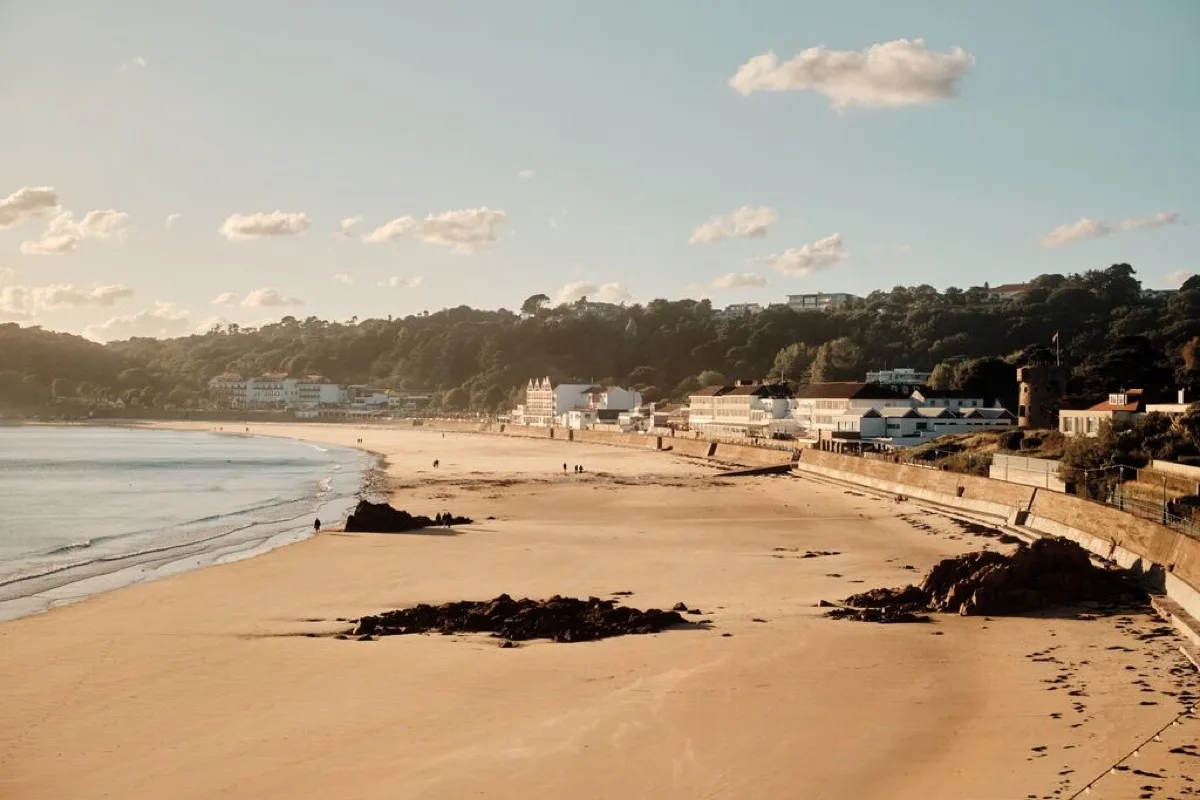 South-west
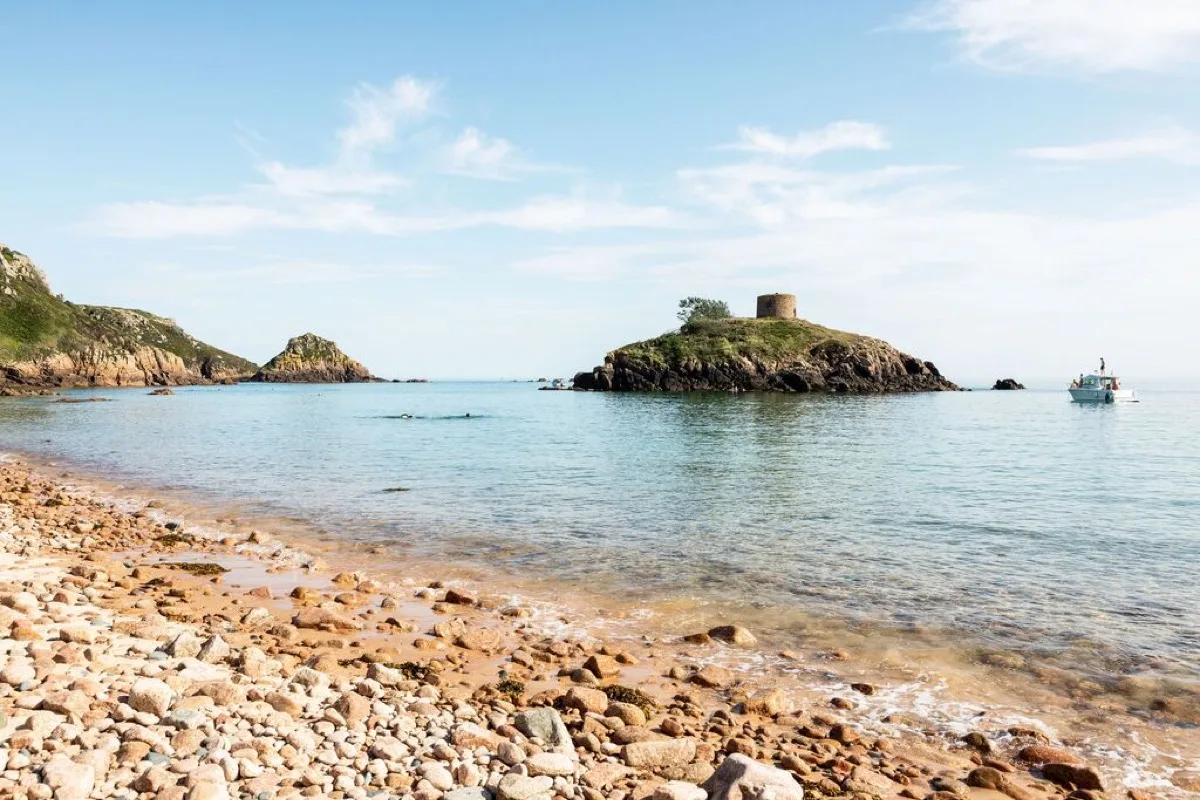 South-west
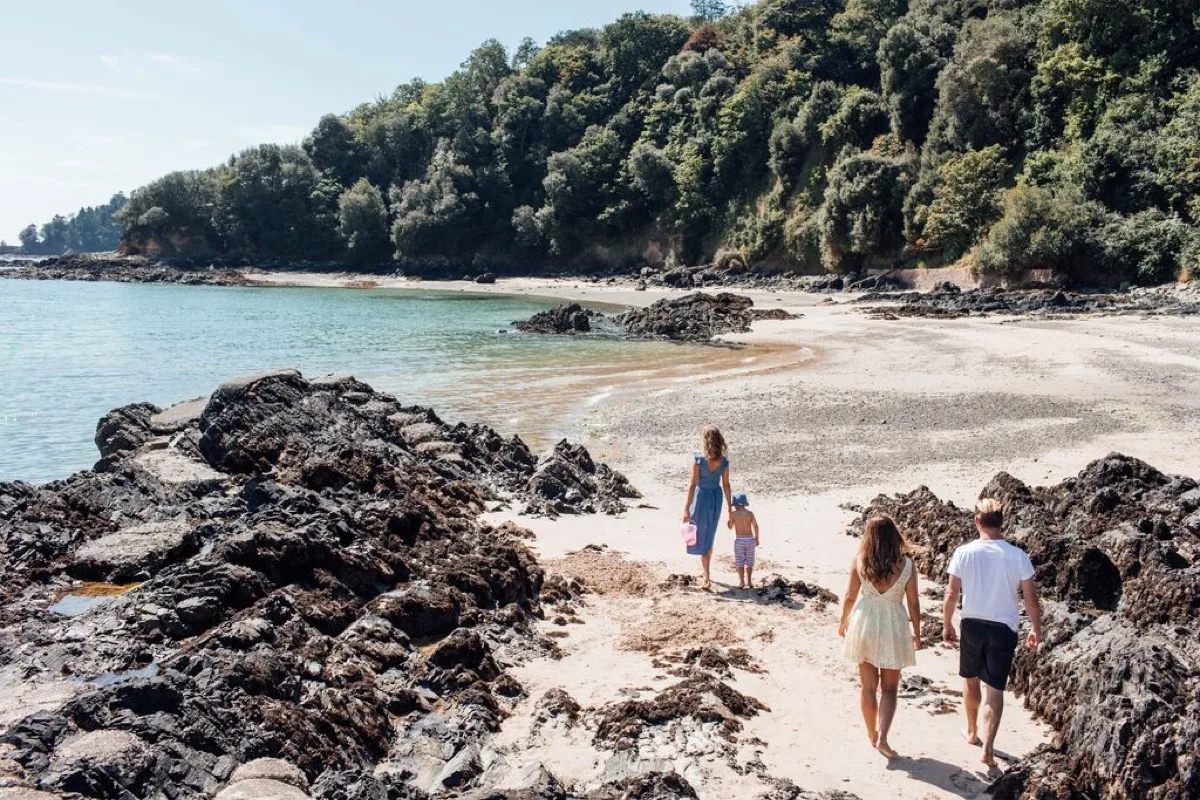 South
South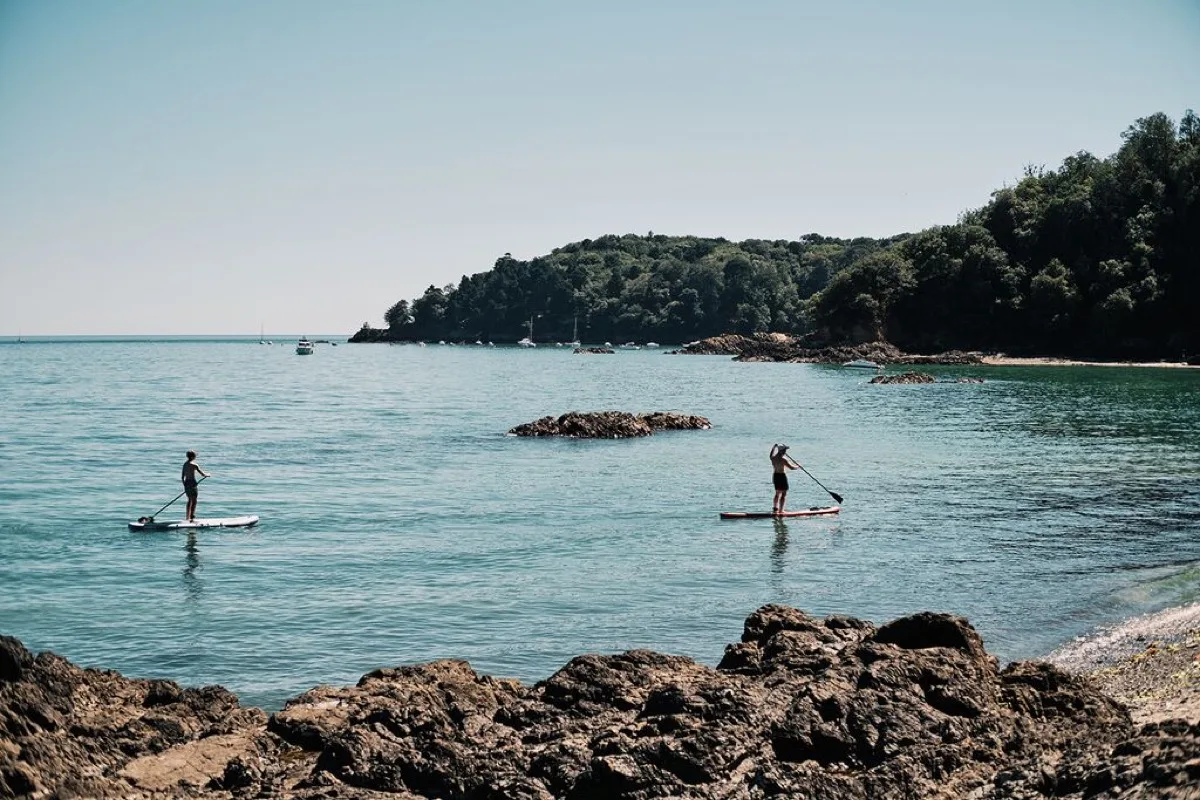 South
SouthTides. Tide predictions are forecasts. Actual sea level is affected by atmospheric pressure, wind and waves. Always observe the sea and your surroundings.
Swimming. Sea swimming carries risks: currents, waves, rocks, submerged structures, boats and cold water. This page is for planning and does not confirm conditions are safe. Do not assume the beach is lifeguarded.
Facilities. Facilities and café opening hours change seasonally. Check directly before making a journey specifically to use them.
 Jersey