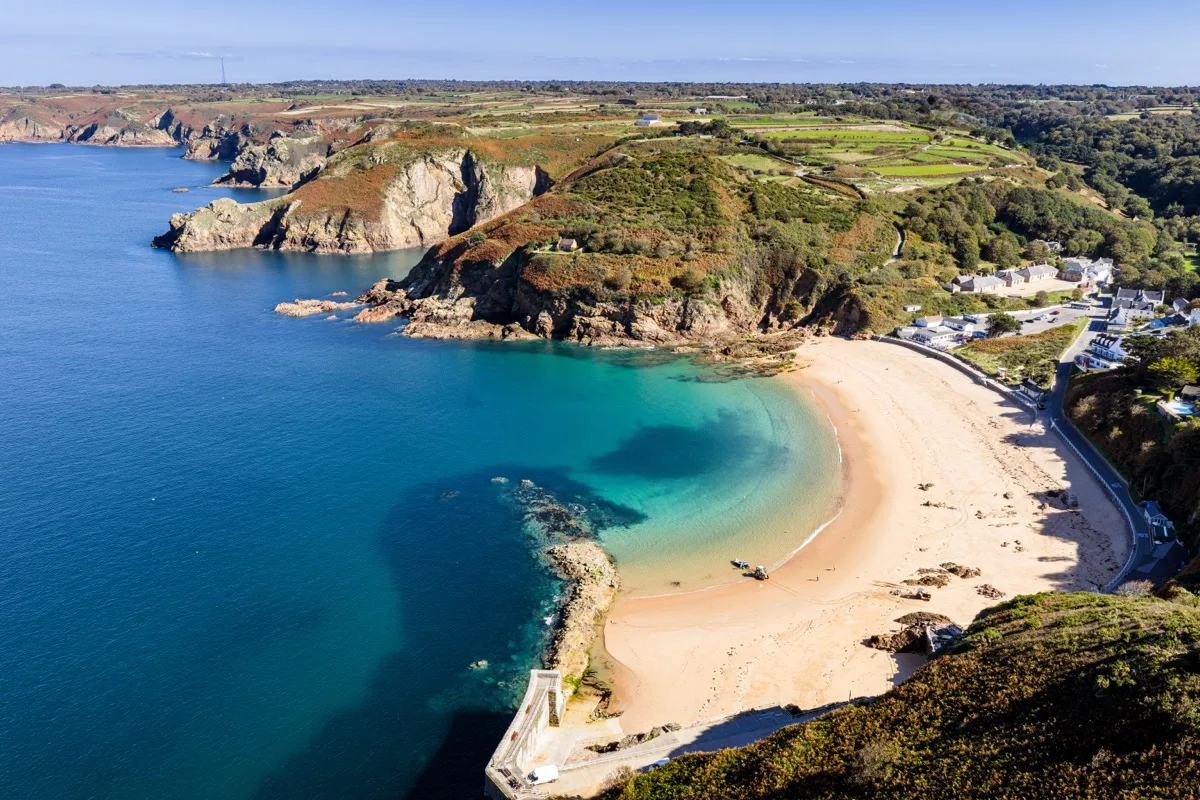
A compact sandy north-coast bay with a steeper shore than Jersey's broad west-coast beaches. The water remains relatively close at low tide, with rocks and pools around the sides.
These predictions use St Helier, Jersey’s standard reference port. Local timing and conditions at Grève de Lecq can vary slightly with weather and coastal geography. Times are shown in local Jersey time.
Grève de Lecq is a small north-facing bay, approximately 300 metres across. Its sandy beach slopes relatively steeply and contains scattered rocks. A sizeable stream passes through an outfall and falls onto the beach.
Because the beach is steeper than St Ouen's Bay or Grouville, the shoreline does not retreat as far at low water. This makes the water easier to reach through much of the tidal cycle, but it also means the beach can lose space more quickly as the tide rises.
Wooded slopes and cliffs frame the bay. These reduce exposure to some winds, though the beach remains open to swell arriving from the north and north-west.
At lower water, a wider central area of sand appears and rocks around the edges become easier to reach. The water generally remains closer than at Jersey’s flatter beaches, which is one reason the bay is popular for paddling and swimming.
As the tide rises, the sea advances relatively quickly up the sloping beach. On larger tides, space close to the seawall and boardwalk becomes restricted. People sitting near the upper beach can be displaced sooner than expected.
The bay does not normally lose every trace of usable shore in the way Plémont can, but available space depends on tidal height and sea conditions. Waves can also run further up the beach than the still-water tide level suggests.
The enclosed shape of Grève de Lecq can make it appear calmer than Jersey's west coast. However, waves and moving water still enter the bay, and conditions around the rocks can differ from the centre.
The beach becomes deeper more quickly than Jersey’s flatter bays. This can make swimming access convenient but means children and weaker swimmers may move out of standing depth sooner than expected.
Grève de Lecq is seasonally patrolled by RNLI lifeguards. The published 2026 patrol hours are 10am to 6pm during the patrol period. Where flags are displayed, swimmers should remain between the red-and-yellow flags.
Kayaks and paddlecraft are commonly launched here, but the cliffs limit landing places beyond the bay. Users should account for swell, wind and the possibility that small neighbouring coves will be covered at high water.
Lower tides expose rocks on both sides of the bay, with pools and channels suitable for exploring. The central sandy area remains the easiest route back.
The incoming tide can isolate individual rocks or remove the dry route around the base of the cliffs. Head back towards the main beach rather than around headlands without local knowledge.
A relatively large stream reaches the beach through an outfall. The Government of Jersey warns that water quality in streams and outfalls can deteriorate during and after heavy rainfall. Avoid playing in or immediately around discoloured runoff.
This matters particularly at Grève de Lecq because the stream crosses a well-used part of the beach rather than entering at a remote end. Grève de Lecq is a monitored bathing water; each published result is a snapshot from when it was sampled.
The beach can be reached by a cobbled slipway and steps. The slipway is more direct than the long staircase at Plémont, but its uneven surface may still be difficult for wheelchairs, pushchairs and people with reduced mobility. Accessible toilets are listed nearby.
Parking is available close to the beachfront, though the area can become busy during warm weather and school holidays. The surrounding cliffs can place parts of the beach in shade later in the day, particularly outside midsummer.
Facilities include:
No community photos of Grève de Lecq yet. Be the first to add one and help build a picture of the beach at every state of the tide.
Add your photoOther bays and beaches close to Grève de Lecq.
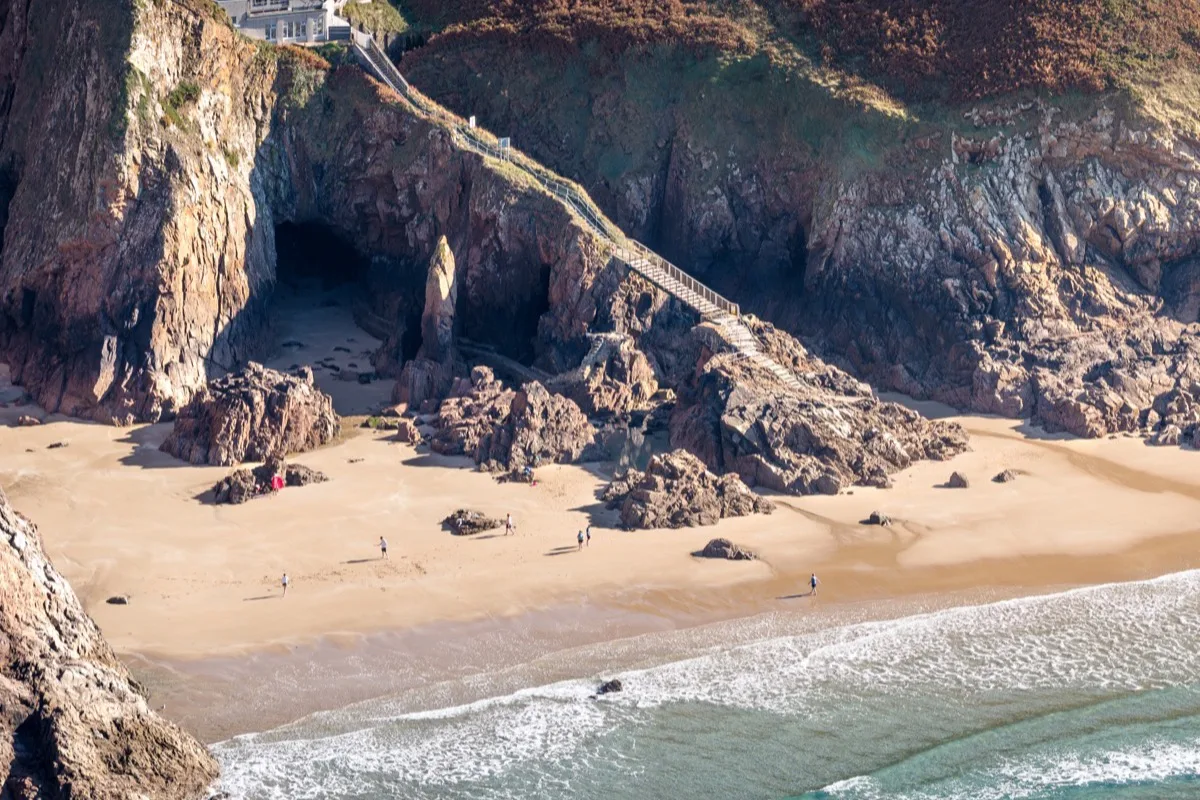 North-west
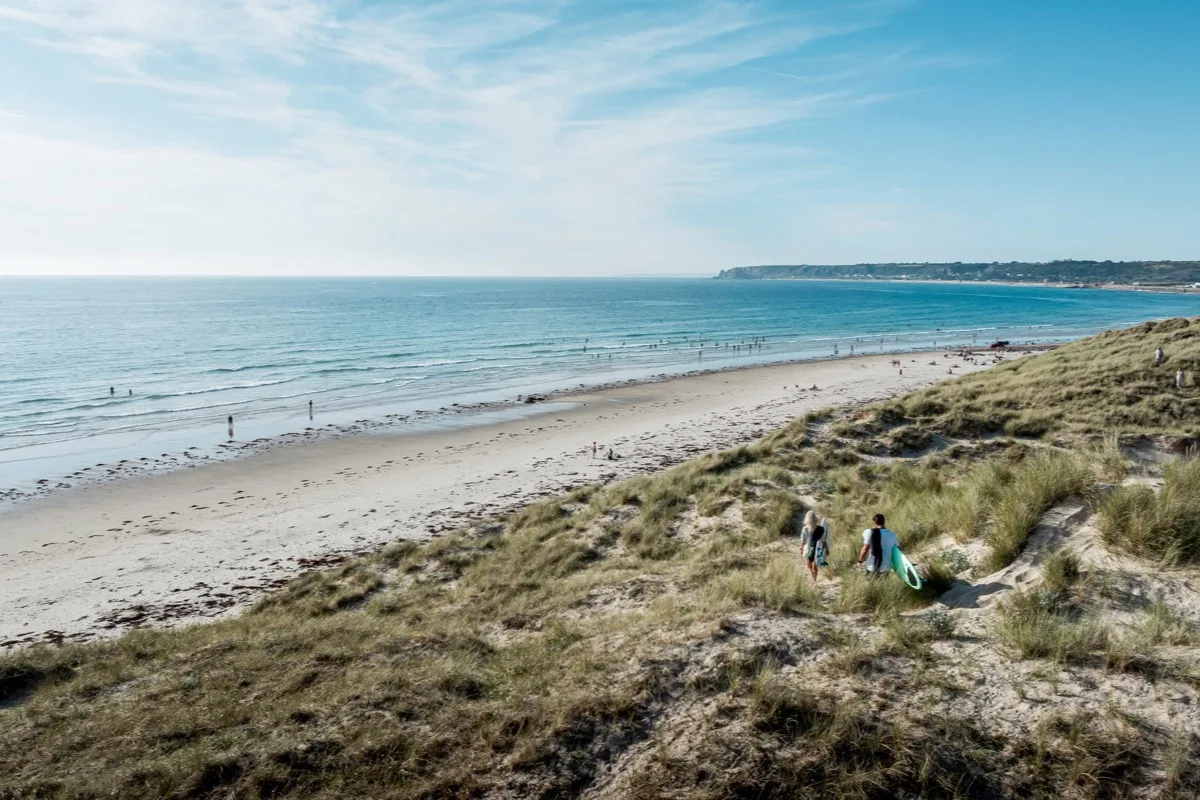 West
West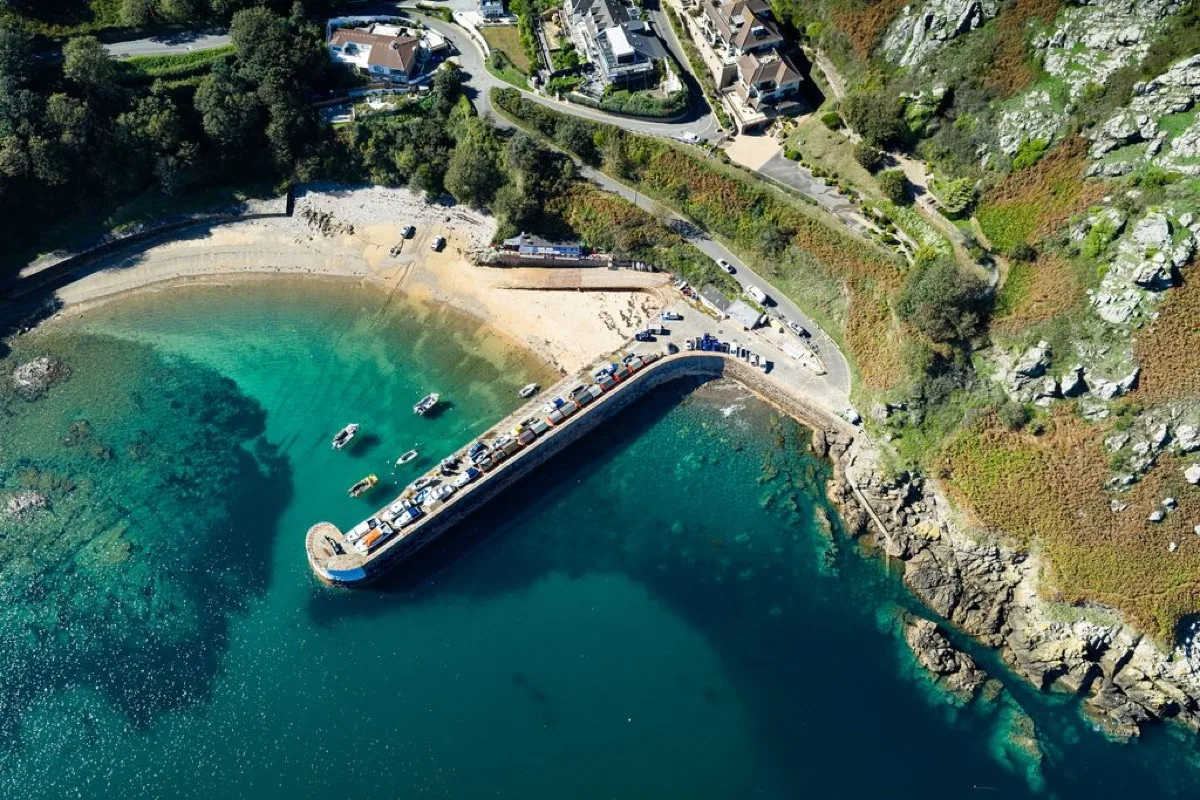 North
NorthTides. Tide predictions are forecasts. Actual sea level is affected by atmospheric pressure, wind and waves. Always observe the sea and your surroundings.
Swimming. Sea swimming carries risks: currents, waves, rocks, submerged structures, boats and cold water. This page is for planning and does not confirm conditions are safe. Do not assume the beach is lifeguarded.
Facilities. Facilities and café opening hours change seasonally. Check directly before making a journey specifically to use them.
 Jersey