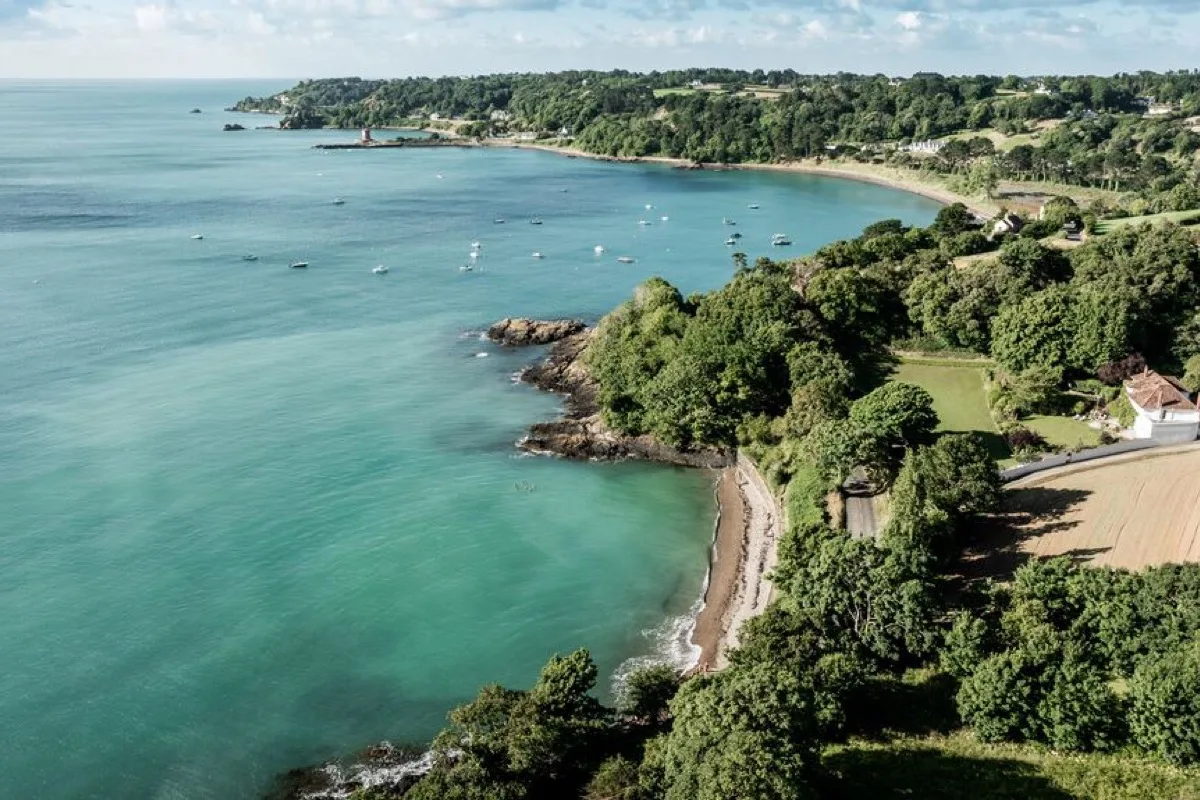
A pebbly east-coast beach with a broad sandy lower shore. Low tide exposes shallow sand and rock pools, while high water covers the sand and brings the sea close to the upper beach.
These predictions use St Helier, Jersey’s standard reference port. Local timing and conditions at Archirondel Bay can vary slightly with weather and coastal geography. Times are shown in local Jersey time.
Archirondel is a curved east-facing beach immediately south of St Catherine's Bay. Its upper shore is predominantly pebbles and shingle, but the falling tide reveals a broad, flat area of sand.
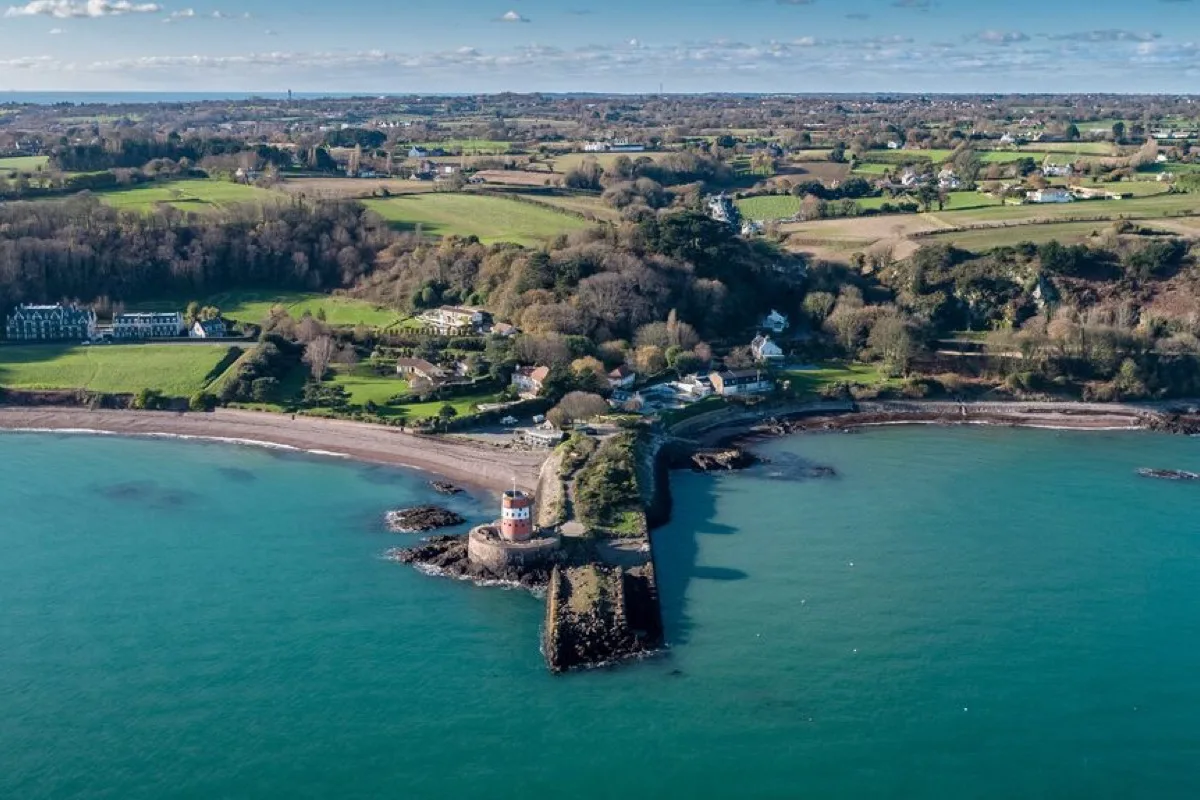
The red-and-white Archirondel Tower stands on a rocky outcrop at the northern end of the beach. Construction began in 1792, and the tower was later connected to the shore by the unfinished southern arm of the proposed St Catherine's harbour.
The beach catches the morning sun but falls into shade earlier than Jersey’s south- and west-facing beaches. It is relatively protected from westerly winds, although easterly conditions can make the shore more exposed.
At low water, the sea retreats across the flat sandy lower beach. This produces a wide area for walking and paddling, although the water may be some distance from the upper shore. Because the seabed slopes gently, the water remains shallow for a considerable distance at lower states of tide.
As the tide rises, the sea advances steadily across the sand. Mid tide usually provides a useful balance between remaining beach space and a shorter walk to the water.
At high water, the sand is submerged and the sea reaches the upper pebbles. Swimming entry is then shorter, but there may be less room for sitting or leaving belongings above the water. The tide also changes access around the tower: rocks and pools around its base are more exposed at lower water, while higher water surrounds more of the outcrop.
Archirondel is commonly used for swimming because the beach slopes gently and the bay is protected from winds arriving from the west. The flat seabed generally creates a gradual entry rather than the sudden depth found at Bouley Bay.
That does not mean conditions are always calm. Easterly and north-easterly winds can send chop and waves directly towards the beach, and the pebbled upper shore may make entry less comfortable around high water. Archirondel is not lifeguarded.
Swimmers should consider:
The gently shelving lower beach makes Archirondel one of the easier Jersey beaches for shallow-water paddling at lower and middle states of tide. However, shallow water can extend a long way from the shore, so do not assume the edge of the sea is close to the upper beach or facilities.
Low tide exposes rocks, pools and channels around Archirondel Tower and at the edges of the beach. The tower outcrop is the principal area for exploring rather than the central sandy shore.
Watch for slippery weed-covered rocks, isolated pools filling behind you, the incoming tide narrowing routes around the outcrop, and uneven stone beside the unfinished harbour arm. The central beach generally provides the clearest return route.
The bay can provide a convenient launch in light conditions. The gentle lower shore is straightforward when there is sufficient water, although low tide creates a long carry across sand.
The shelter offered by the coastline depends on wind direction. Conditions outside the immediate bay and towards St Catherine's may be more exposed than they appear from the beach, and offshore winds can make returning difficult even when the water beside the shore looks smooth.
The beach is reached by a cobbled slipway. Visit Jersey describes the access as slightly steep, so it is not level beach access. The upper beach is made of loose pebbles, which limits wheelchair and pushchair use once the firm access surface ends.
Parking is available beside or close to the beach. The location is considerably easier to reach than Jersey's cliff-access beaches, but the natural shore remains uneven.
Facilities include:
Archirondel is not lifeguarded.
No community photos of Archirondel Bay yet. Be the first to add one and help build a picture of the beach at every state of the tide.
Add your photoOther bays and beaches close to Archirondel Bay.
 East
East North-east
 East
East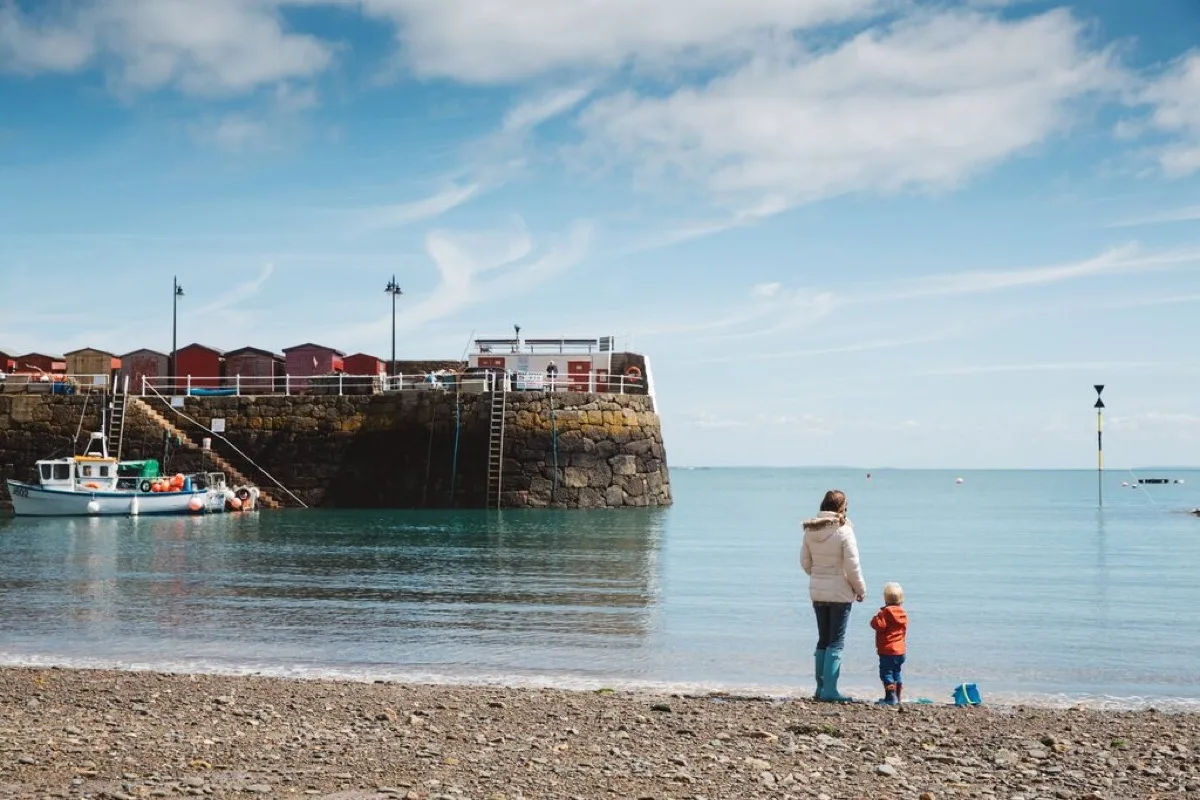 North-east
Tides. Tide predictions are forecasts. Actual sea level is affected by atmospheric pressure, wind and waves. Always observe the sea and your surroundings.
Swimming. Sea swimming carries risks: currents, waves, rocks, submerged structures, boats and cold water. This page is for planning and does not confirm conditions are safe. Do not assume the beach is lifeguarded.
Facilities. Facilities and café opening hours change seasonally. Check directly before making a journey specifically to use them.
 Jersey